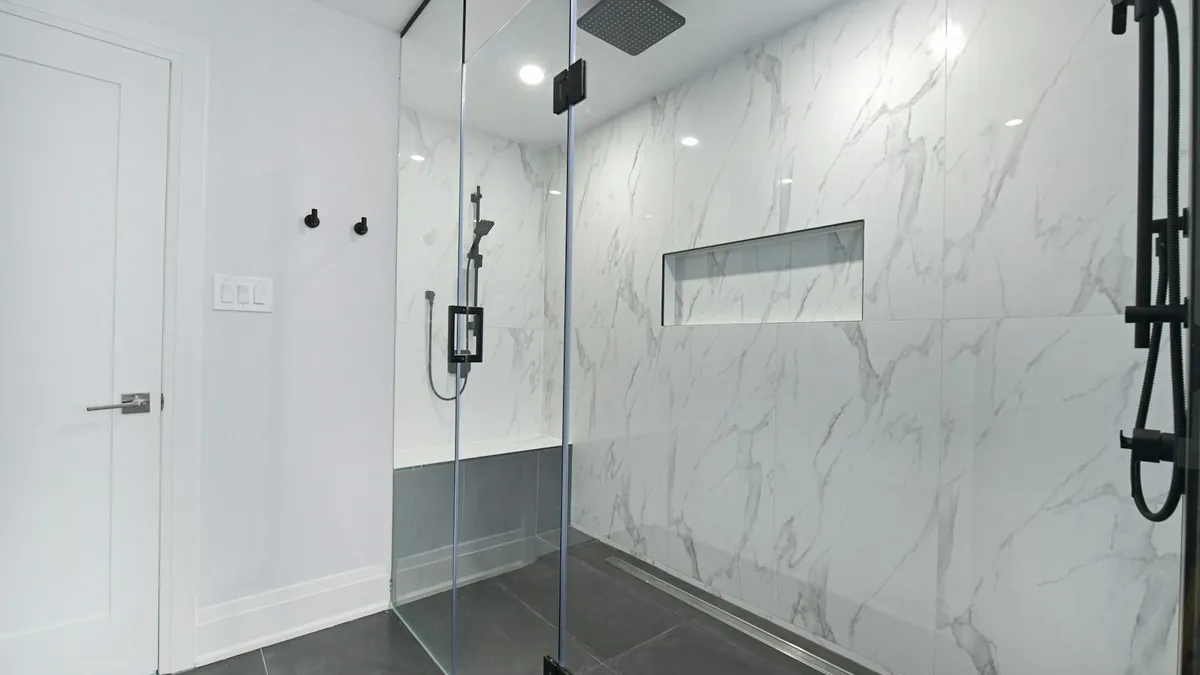
Spray the glass with warm white vinegar (or equal parts vinegar and water with a drop of dishwashing liquid), leave it for 15 to 30 minutes, then scrub with a non-scratch pad and a paste of bicarb soda. Rinse well and dry with a squeegee or microfibre cloth. For stubborn build-up, repeat or use a glass-safe descaler. Never use steel wool or abrasive powders. Etched glass, where minerals have bonded with the surface, can't be fully restored.
The shower screen is one of the first things an agent sees in the bathroom. Brisbane's water leaves white mineral spots, and combined with soap that becomes a cloudy film that ordinary bathroom spray won't shift.
What you'll need
- White vinegar, warmed (it works faster warm)
- Bicarb soda
- Dishwashing liquid
- Non-scratch scrub pads and a soft brush
- A squeegee and microfibre cloths
- Rubber gloves
Step by step
- Rinse the glass with hot water to soften the build-up.
- Spray warm vinegar generously over the whole screen. For vertical glass, lay vinegar-soaked paper towel against the worst areas so it stays in contact.
- Wait 15 to 30 minutes.
- Scrub with a bicarb paste on a non-scratch pad, using small circles.
- Rinse thoroughly with clean water.
- Squeegee and buff dry, then check from an angle in good light. Repeat on any cloudy patches.
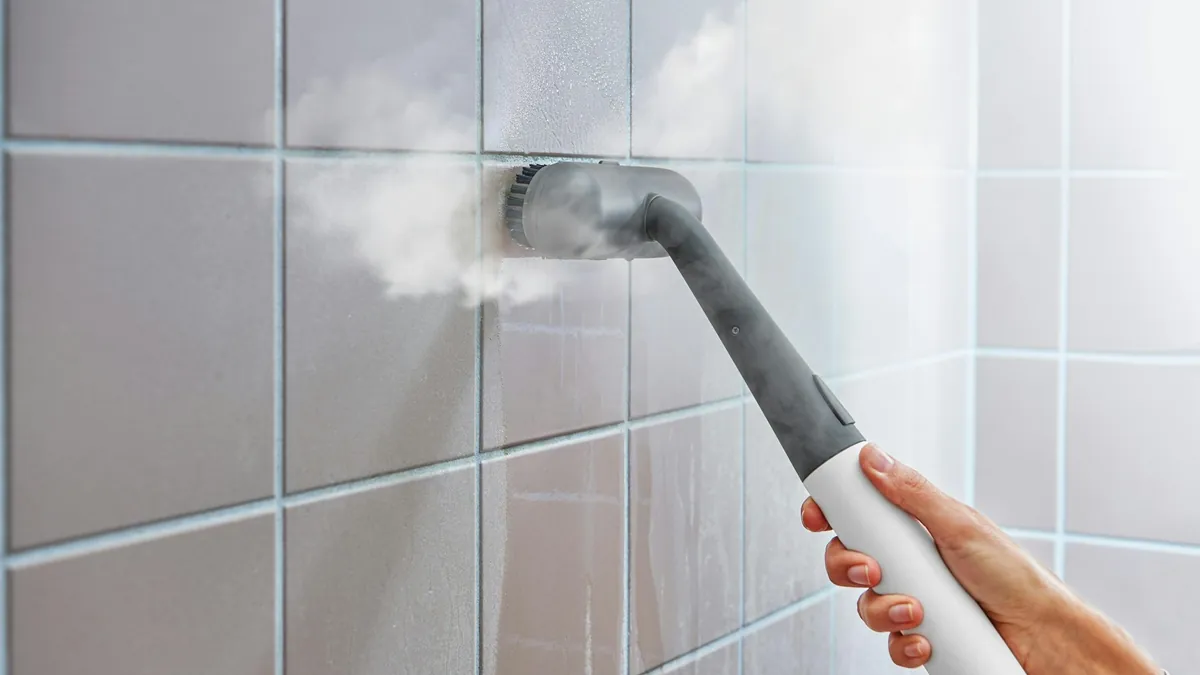
Don't forget the frame, tracks and seals
- Scrub the bottom track and the corners with an old toothbrush and the bicarb paste.
- Clean the door seals and the silicone along the base. Black spots in silicone are mould; our mould removal guide covers what works.
- Descale the shower head and taps with a vinegar-soaked cloth wrapped around them for 30 minutes.
What not to use
- Steel wool or scourers: they scratch glass permanently.
- Abrasive powders on coated glass.
- Vinegar on natural stone (marble or travertine) around the shower: acid etches stone.
- Bleach and vinegar together: mixing them releases toxic gas.
When marks are permanent
If the glass stays cloudy after a proper descale, the minerals may have etched the surface. That's very hard to reverse, and if it was already there when you moved in, it should be on your entry condition report. It's worth knowing the difference between fair wear and tear and damage.
The rest of the bathroom
Our bathroom bond cleaning guide covers grout, exhaust fans, vanities and toilets. Or book our bond cleaning: shower screens, tracks and grout are on our checklist, and we use eco-friendly products wherever possible, with stronger descalers only when a screen really needs them.
Vanity, mirrors and taps
Finish the bathroom with the surfaces people notice first. Clean the mirror with a microfibre cloth and a little glass cleaner, wiping in an S pattern to avoid streaks. Wipe the vanity top, the basin and the plughole, and pull out any hair from the waste. Descale taps with a vinegar-soaked cloth, then buff them dry. Open the vanity cupboard and drawers and wipe them inside, because agents open them. Allow 1 to 2 hours for a heavily scaled bathroom.
Allow enough time. A shower screen with years of build-up can need two or three rounds of soaking and scrubbing. Start it early in the day, work on other parts of the bathroom while the vinegar sits, and check the glass again in daylight before you finish. Scale is much easier to see in natural light than under a bathroom globe.
Frequently asked questions
Why does my shower glass still look cloudy after cleaning?
Either there's still a thin layer of scale (repeat the vinegar soak), or the glass is etched. Check by wetting it: if the cloudiness disappears when wet and returns when dry, it's usually etching.
Can I use a magic eraser on shower glass?
Melamine sponges are mildly abrasive. Test on a corner first, and avoid them on coated glass.
How do I stop it coming back?
Squeegee the glass after every shower. It takes 20 seconds and prevents most build-up.

Written by the ECO Cleaning Brisbane teamWe're a locally owned bond cleaning company that has cleaned Brisbane rentals since 2010, working to the same checklists property managers use at the final inspection. About us.