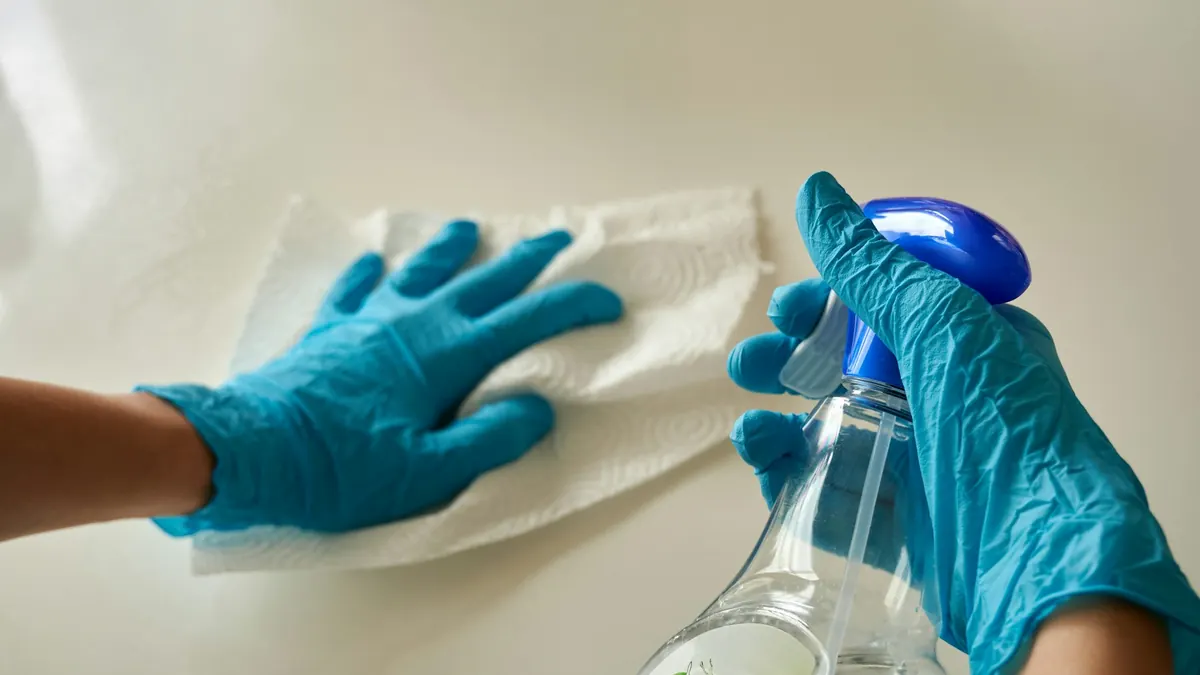
Test first on a hidden spot, then wash walls with warm water and a few drops of dishwashing liquid on a soft microfibre cloth, working from the bottom up. Use a melamine sponge (magic eraser) only lightly on stubborn scuffs, and remove Blu-Tack by dabbing a fresh piece onto the residue. Don't scrub flat or matt paint hard, because it burnishes and leaves a shiny patch.
Walls catch a lot during a tenancy: chair scuffs, fingerprints around light switches, splashes in the kitchen and Blu-Tack from posters. Most of it comes off, and getting it off is cheaper than a deduction for painting. The trick is knowing what your paint can take.
Check the paint finish first
- Flat or matt (common on ceilings and older living areas): marks easily and burnishes if scrubbed. Use the gentlest method and minimal pressure.
- Low sheen or satin (most modern rental walls): washable with a soft cloth.
- Semi-gloss or gloss (doors, frames, wet areas): the most durable and easiest to clean.
Rub a hidden spot behind a door with a damp cloth. If paint comes off on the cloth, keep cleaning to a light wipe and spot treatment only.
What you'll need
- Two buckets: one with warm water and a few drops of dishwashing liquid, one with clean rinse water
- Soft microfibre cloths and a non-scratch sponge
- A melamine sponge for scuffs
- Sugar soap for kitchens and heavy grime (diluted as the label says)
- A fresh piece of Blu-Tack and a plastic scraper
Step by step
- Dust first. Run a dry microfibre mop or cloth over the wall, cornices and skirting boards. Wiping a dusty wall just makes muddy streaks.
- Wash from the bottom up. It sounds backwards, but drips running down a dirty wall leave clean streaks that are hard to blend. Starting low avoids that.
- Use a damp cloth, not a wet one. Wring it out well. Water running behind light switches and power points is a safety risk.
- Rinse and dry. Wipe with the clean water cloth, then a dry one, so no soap film is left to attract dirt.
- Spot-treat what's left. Work on remaining marks one at a time with the methods below.
Removing specific marks
Scuffs from shoes and furniture
Dampen a melamine sponge and rub gently in small circles. It works like very fine sandpaper, so on matt paint use only light pressure and stop once the mark lifts.
Blu-Tack and its oily stain
Peel off what you can, then press a fresh ball of Blu-Tack onto the residue and lift it repeatedly. The oily shadow it leaves usually fades with a little dishwashing liquid on a cloth. Avoid pulling hard, because that takes paint with it.
Sticky tape and hook adhesive
Warm the adhesive with a hairdryer for 20 to 30 seconds and peel it slowly at a low angle. Leftover glue comes off with a drop of eucalyptus oil on a cloth, followed by a soapy wipe.
Crayon and pencil
A melamine sponge usually lifts crayon. For stubborn wax, warm it gently with a hairdryer and wipe it away with a soft cloth.
Kitchen grease
Diluted sugar soap cuts the film behind the stove and around the rangehood. Rinse well afterwards. More in our kitchen bond cleaning guide.
Don't forget these
- Light switches and power points (wipe the plate only, with a barely damp cloth)
- Door frames, architraves and both sides of every door
- Skirting boards, top edge included
- Cornices and ceiling corners for cobwebs
- Air-conditioner wall units and vents
When a mark won't come off
Stop before you damage the paint. A small mark you've tried to clean looks better at inspection than a rubbed-through patch. If there are holes, paint pulled off or marks that won't lift, talk to the agent before the inspection. Painting a patch yourself in a slightly different colour often looks worse. Knowing which marks count is covered in fair wear and tear vs damage.
Wall washing as part of a bond clean
Our bond cleans include spot cleaning of marks on walls, light switches and doors. Full wall washing for heavily marked homes is available for $50 per room. Check our bond cleaning prices, or see everything that's covered on the bond cleaning checklist.
Frequently asked questions
Can I use a magic eraser on rental walls?
Yes, gently. A damp melamine sponge removes scuffs well, but scrubbing hard on flat or matt paint leaves shiny patches. Test it somewhere hidden first.
Is sugar soap safe on painted walls?
Diluted to the label's ratio, sugar soap is made for painted surfaces. Rinse afterwards so it doesn't leave a residue.
Should I wash every wall for a bond clean?
Not usually. Spot cleaning marks is enough in most homes. Full wall washing is worth it for kitchens, kids' rooms, smoke-affected homes or very long tenancies.

Written by the ECO Cleaning Brisbane teamWe're a locally owned bond cleaning company that has cleaned Brisbane rentals for over 10 years, working to the same checklists property managers use at the final inspection. About us.